


EcoFlake: When Post-Industrial Becomes a New Raw Material
Engineering, creativity and applied innovation
Sustainability in industry requires more than good intentions. It requires technical decision-making, investment and a strategic vision of what it truly means to reuse materials.
EcoFlake was developed from this perspective.
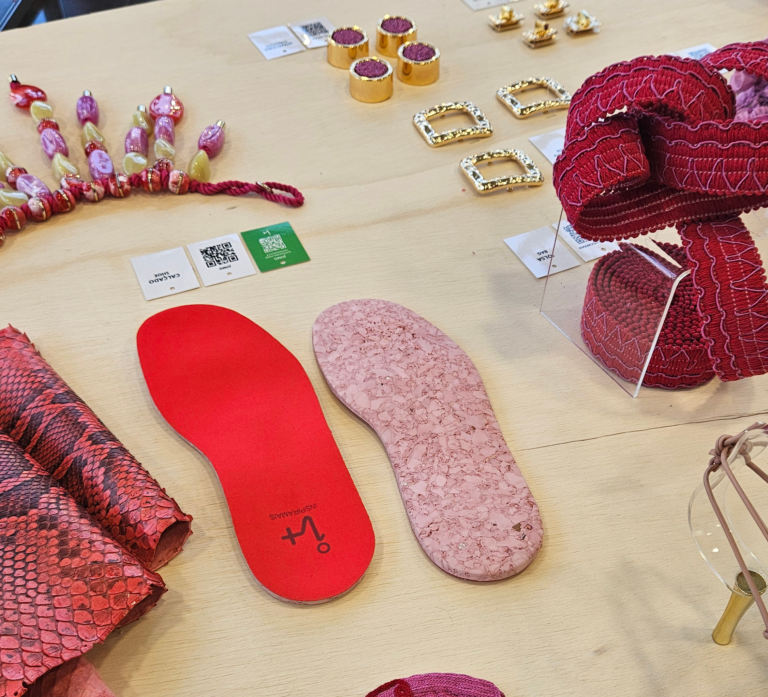
Made with approximately 80% post-industrial recycled materials, its main composition is EVA with polyester fabric, originating from production offcuts such as anatomical insole cuts and trimming edges.
At JOMO, we do not use the term “waste.” What exists is raw material that can still be fully utilized.
Post-industrial: a conscious choice
There is a strong tendency to value only post-consumer materials. While we respect this approach, we believe post-industrial materials must also be strengthened.
Industrial offcuts often maintain superior technical quality and high reuse potential. Discarding them means losing embedded energy, process value and high-quality material.
Some materials can easily be reintroduced into the same production flow. Others require agglomeration engineering, density control and mechanical behavior analysis to become a viable new raw material.
This is where innovation begins.
EcoFlake is not simply reuse. It is the creation of a new material base.
Applied engineering: how EcoFlake is structured
Through controlled agglomeration of EVA particles with polyester fabric, we create a raw material with:
- Stable technical structure
- Good mechanical resistance
- Flat or molded application possibilities
- A distinctive visual identity
It can be used in the production of:
- Insoles and sandal midsoles
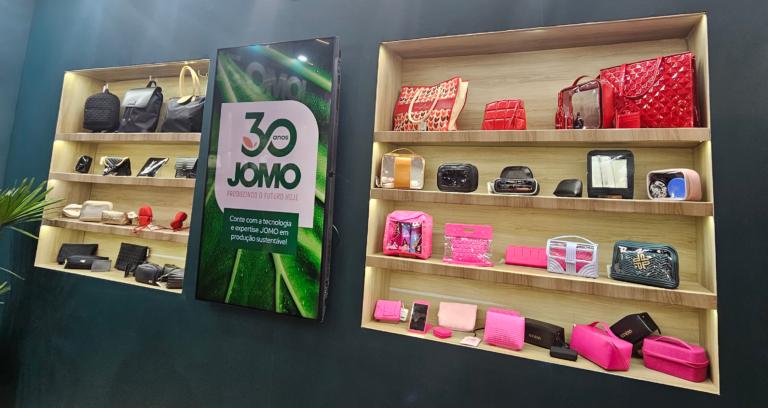
- Necessaires
Natural aesthetics as differentiation
EcoFlake’s most striking feature is its vibrant and multifaceted coloration, directly resulting from the origin of the materials.
Each batch carries a unique color composition. Depending on production availability, specific tonal directions may be achieved.
The result is a material that naturally communicates its sustainable origin. Its appearance speaks for itself.
Conclusion
Applied sustainability is not about discarding less. It is about thinking better.
When post-industrial materials are treated as potential rather than waste, solutions emerge that combine engineering, aesthetics and responsibility.
EcoFlake proves that innovation starts within the factory.